
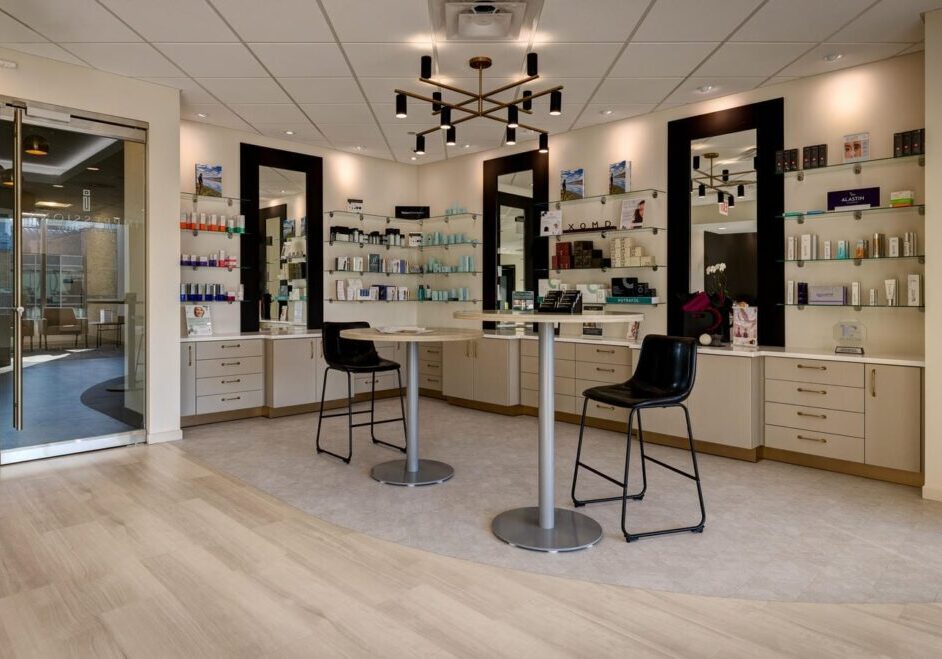
For ambulatory surgery centers (ASCs), facility design plays a powerful role in shaping physician recruitment.
A thoughtfully designed ASC communicates professionalism, reduces friction in daily workflows, and helps physicians perform at their best. Conversely, outdated or poorly planned environments can discourage high-performing surgeons from committing to a facility.
Below are some key ways design directly impacts ASC physician recruitment and retention.
Efficiency That Respects Physicians’ Time
One of the most influential recruitment factors for surgeons is operational efficiency. Physicians gravitate toward ASCs where they can complete cases smoothly, minimize delays, and maintain predictable schedules.
Design decisions that improve efficiency include:
- Clear separation of patient and staff circulation paths
- Optimized adjacency between pre-op, ORs, sterile core, and PACU
- Adequate storage to prevent hallway clutter and supply searches
- Standardized OR layouts that reduce setup variability
Fast turnovers and minimal bottlenecks become associated with professionalism and competence. Efficient design signals that leadership understands the economic value of surgical time. This becomes a strong recruitment advantage.
Clinical Autonomy and Physician Comfort
Physicians are often drawn to ASCs because of the control they gain compared to hospital environments. However, that sense of autonomy can be undermined if the physical environment feels restrictive.
Design can support autonomy through:
- Flexible OR sizing that accommodates specialty equipment
- Dedicated physician work areas for charting and collaboration
- Comfortable physician lounges that support between-case recovery
- Storage solutions tailored to surgeon preferences and workflows
Physicians are more likely to view the ASC as a long-term professional home rather than simply a procedural venue when it’s designed with their needs in mind.
Technology Integration and Future Readiness
Top-performing physicians want access to advanced surgical technology and confidence that the facility will remain relevant as techniques evolve. A forward-thinking OR design helps communicate that commitment.
Important design strategies include:
- Structural capacity for heavier or ceiling-mounted equipment
- Infrastructure supporting imaging, robotics, and minimally invasive tools
- Adequate data connectivity and integration with digital surgical platforms
- Modular planning that allows technology upgrades without major renovation
Facilities aligned with expectations from organizations like the Centers for Medicare & Medicaid Services often demonstrate stronger long-term viability, further reassuring physicians evaluating partnership opportunities.
Patient Experience Reflects Physician Reputation
Physicians recognize that their professional reputation is closely tied to patient experience. A well-designed ASC enhances comfort, privacy, and overall satisfaction.
Design elements that influence patient perception include:
- Private, calming pre-op and recovery environments
- Intuitive wayfinding that reduces anxiety for patients and families
- Thoughtful acoustics and lighting that promote comfort
- Efficient discharge pathways that avoid overcrowding
When surgeons see patients consistently having positive experiences, they gain confidence that the facility is conducive to positive patient outcomes. This serves as an important confidence booster in the facility.
Staff Satisfaction and Team Stability
Surgical success depends heavily on staff consistency and morale. Facilities that support staff efficiency and comfort tend to retain stronger teams. This, in turn attracts physicians.
Design features that support staff recruitment and retention include:
- Ergonomic workspaces that reduce fatigue
- Adequate break areas and staff amenities
- Clear supply organization and minimized travel distances
- Visibility that enhances communication without increasing noise or stress
Stable, experienced teams create smoother cases and stronger surgeon trust, making the ASC more attractive to prospective physician partners. A design that supports staff morale can create this type of positive environment.
Compliance and Professional Confidence
Physicians evaluating an ASC want assurance that the facility meets regulatory and accreditation expectations. Design aligned with guidance from The Facility Guidelines Institute and accrediting bodies such as The Joint Commission reinforces credibility.
Key confidence-building design components include:
- Proper sterile processing workflow and separation
- Life safety and egress planning
- Infection prevention strategies integrated into layout
- Documentation areas that support compliance without workflow disruption
A facility that visibly reflects compliance reduces physician concerns about operational risk.
Growth Potential and Partnership Appeal
Many physicians join ASCs with an ownership mindset. They are evaluating not only the current environment but also the facility’s capacity for growth.
Design can influence this perception by demonstrating:
- Expansion opportunities for additional ORs or specialties
- Flexible procedure rooms adaptable to changing case mix
- Infrastructure supporting extended hours or increased volume
- Efficient scheduling flow that allows for future case growth
An ASC that feels scalable and adaptable is far more attractive to physicians seeking long-term partnership and financial upside.
The Recruitment Advantage of Physician-Centered Design
Ultimately, ASC design communicates values. Facilities that prioritize efficiency, flexibility, comfort, and patient experience send a message that they prioritize their physicians.
Firms experienced in ASC planning, such as APEX Design Build, often emphasize early physician input during programming and layout development. This collaborative approach not only improves the final environment but also strengthens recruitment even before construction is complete.
When physicians see their feedback shaping the facility, they develop a sense of ownership that significantly increases recruitment success. Contact us to find out more about how we can help with your ASC project.