
Labor is the single largest ongoing expense for most businesses, and ambulatory surgery centers are no exception. As wages rise and staffing shortages persist, ASC owners are under increasing pressure to do more with leaner teams, without compromising patient safety or care.
What many owners underestimate is how much staffing costs are shaped by the physical design of the facility itself. Smart architectural planning can reduce the number of staff required per shift, improve productivity, and ease burnout, all while maintaining high clinical standards.
Here’s how smart ASC design leads to lower staffing costs.
Design Dictates How Many People You Need
Every unnecessary step, long hallway, or poorly placed workspace adds labor hours over time. In poorly designed ASCs, staff spend too much time walking, searching for supplies, or waiting on bottlenecks caused by layout inefficiencies.
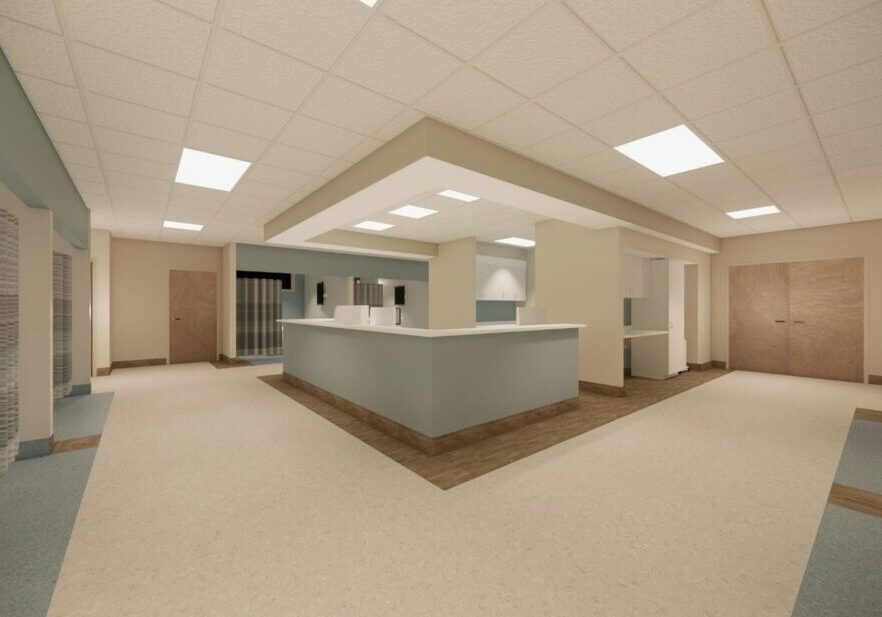
Efficient ASCs are designed to minimize movement and maximize visibility. When staff can see patients, coworkers, and workflow at a glance, fewer people are needed to safely manage operations. Centralized nurse stations, clear sightlines into pre-op and PACU, and logical adjacencies between critical spaces can reduce staffing requirements.
Design can determine how many people are required for an ASC to function smoothly.
Reduced Distances = Reduced Labor Costs
Smart ASC layouts shorten distances between key functions by grouping them closer together. They also create more operational efficiency. Pre-op and PACU are positioned close to ORs. Sterile processing is designed for efficient one-directional flow without unnecessary backtracking. Supply rooms are located near where supplies are actually used.
When staff spend less time walking, they spend more time delivering care. Over time, this efficiency allows centers to operate with fewer full-time equivalents while still meeting volume demands.
Centralized Workstations Improve Coverage
Decentralized or poorly placed workstations often require additional staff simply to maintain coverage. Nurses may be physically separated from patients, forcing facilities to increase staffing ratios to maintain safety and compliance.
Centralized workstations solve this problem by improving visibility and communication. From a well-positioned station, fewer staff can safely monitor more patients. This is especially impactful in pre-op and recovery areas, where observation and responsiveness are critical.
Better visibility also reduces reliance on call systems and constant movement, further improving efficiency and reducing fatigue.
Smarter Storage Prevents Staffing Waste
Storage may not seem like a staffing issue, but it has a major impact on labor.
Inadequate or poorly located storage leads to staff hunting for supplies, restocking during peak hours, or improvising when items are missing. These small inefficiencies compound throughout the day.
High-performing ASCs design storage intentionally. Clean and soiled supplies are clearly separated. High-use items are located close to ORs and procedure rooms. Bulk storage is accessible without disrupting clinical flow.
When supplies are easy to find and replenish, staff productivity increases.
Supporting Lean Teams Without Burnout
Reducing staffing costs does not mean pushing staff harder. In fact, poorly designed facilities are one of the leading contributors to staff burnout.
Smart design supports lean teams by making work physically easier. Shorter travel distances, fewer interruptions, better acoustics, and clear workflows reduce cognitive and physical strain. When staff are not constantly compensating for design flaws, morale improves and turnover declines.
Designing for Predictable, Repeatable Workflows
Predictable workflows allow for accurate staffing. Design plays a critical role in creating repeatable processes. Standardized room layouts, consistent equipment placement, and clear circulation paths keep staff moving confidently and efficiently between cases. This reduces delays, improves turnover times, and supports tighter staffing models.
Hospitals often struggle with this due to their size and complexity. ASCs that are intentionally designed can outperform them by operating with precision.
Long-Term Savings That Compound Over Time
While smart design may require thoughtful planning upfront, the financial payoff compounds over the life of the facility. Lower staffing needs per shift, reduced overtime, improved retention, and smoother operations create ongoing savings year after year.
Design as a Strategic Cost-Control Tool
Staffing challenges are not going away. ASCs that want to remain competitive must look beyond short-term fixes and address the root causes of inefficiency within their operations.
Smart design is one of the most powerful tools available to control labor costs. When architecture aligns with operations, ASCs can deliver high-quality care with lean, satisfied teams and a healthier bottom line.
Hire a Design-Build Architecture Firm That Specializes in ASCs
Smart design is a key component to getting the most out of your ASC project. Designing for staff efficiency is an excellent way to ensure that you can reduce costs in the long run.
When it comes to designing and building your next facility, you need a firm that you can trust. Apex specializes in creating ambulatory surgery centers that offer the highest levels of patient care while operating efficiently. If you’d like to talk about your next project, contact us today!